
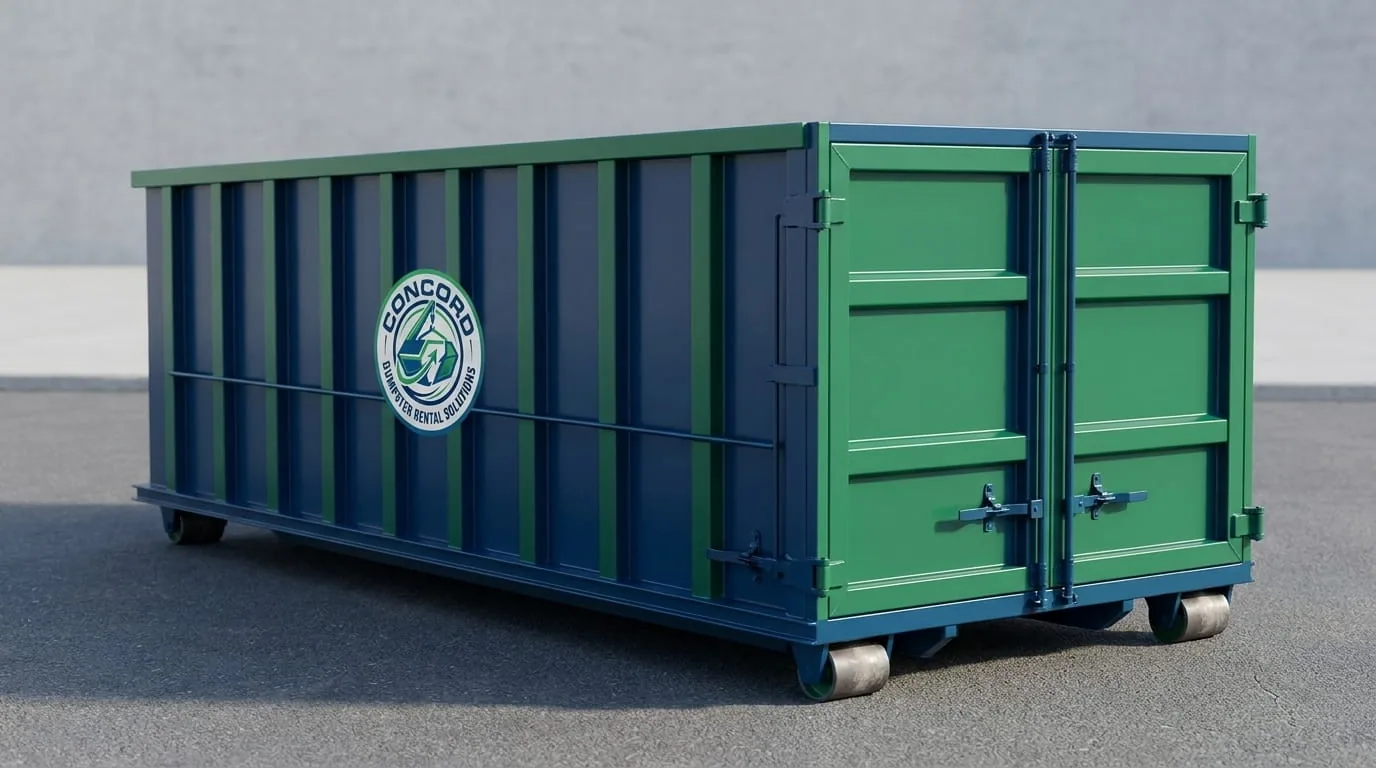
10 Yard Dumpster
The 10 yard is the container people underestimate. It is small enough to sit on a single-car Concord driveway without blocking the garage, and it is the only sensible choice for anything heavy.
Full detailsFive roll-off sizes from 10 to 40 cubic yards. Volume gets you halfway to the right answer — weight decides the rest.
| Size | Dimensions | Capacity | Weight allowance | Space needed |
|---|---|---|---|---|
| 10 Yard Dumpster | 12 ft long x 8 ft wide x 3.5 ft high | about 3 pickup truck loads | 1 to 2 tons included | roughly 45 to 55 ft of straight approach |
| 15 Yard Dumpster | 14 ft long x 8 ft wide x 4.5 ft high | about 4 to 5 pickup truck loads | 2 to 3 tons included | roughly 50 to 60 ft of straight approach |
| 20 Yard Dumpster | 22 ft long x 8 ft wide x 4.5 ft high | about 6 pickup truck loads | 3 to 4 tons included | roughly 60 to 70 ft of straight approach |
| 30 Yard Dumpster | 22 ft long x 8 ft wide x 6 ft high | about 9 pickup truck loads | 4 to 5 tons included | roughly 60 to 70 ft of straight approach |
| 40 Yard Dumpster | 22 ft long x 8 ft wide x 8 ft high | about 12 pickup truck loads | 5 to 6 tons included | roughly 65 to 75 ft of straight approach |
The 10 yard is the container people underestimate. It is small enough to sit on a single-car Concord driveway without blocking the garage, and it is the only sensible choice for anything heavy.
Full details
The 15 yard is the container we recommend more often than any other in Concord, and the reason is the housing stock. Plaster-and-lath demolition is heavy enough that a bigger box would run out of legal weight before it ran out of room.
Full details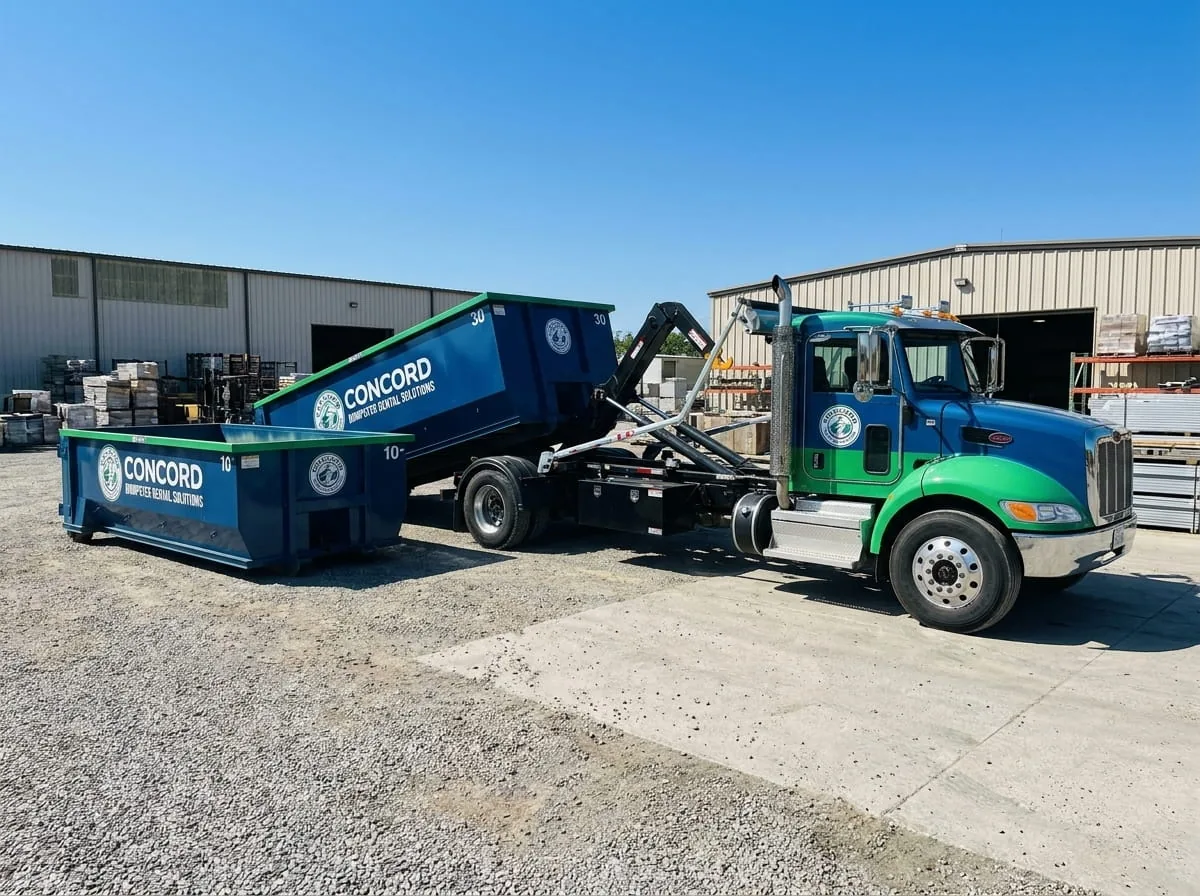
If you asked us to guess what container a Concord homeowner needs before hearing any details, we would say a 20 yard. It handles the majority of residential renovation work without either wasting capacity or running short.
Full details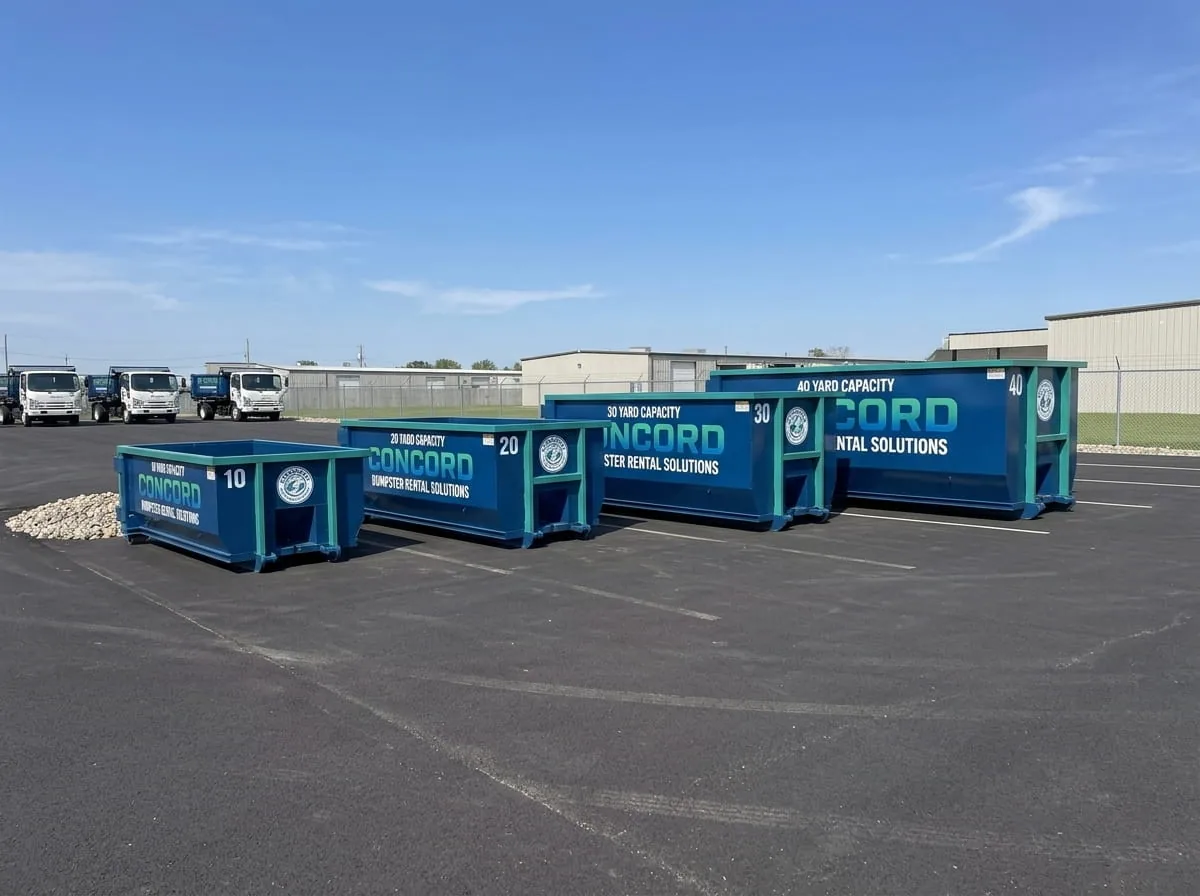
When the material is bulky rather than dense, the 30 yard is where the economics turn in your favour. Household contents, framing offcuts and commercial fit-out debris all take up far more room than they weigh.
Full details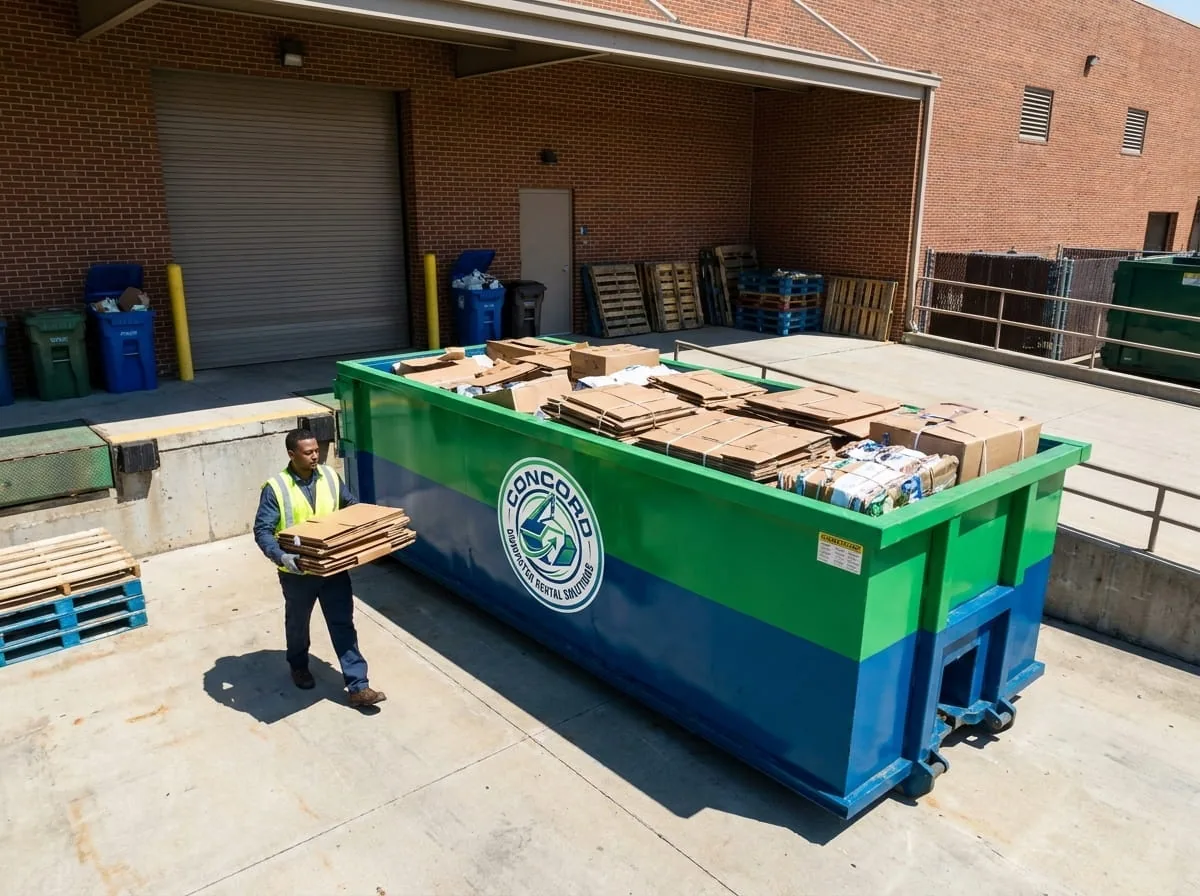
The 40 yard is a commercial and large-construction container. It is the right answer when a site is producing a continuous stream of light, bulky waste and every swap costs the crew time.
Full detailsAsk one question first: is the material heavy or bulky? Plaster, tile, concrete, soil, roofing shingles and old flooring are heavy. Furniture, drywall, framing offcuts, packaging, insulation and general household contents are bulky. Heavy material sizes you down. Bulky material sizes you up.
This matters disproportionately in Concord because of the age of the housing. A remodel in a 1910 South End home and a remodel in a 1998 house off Sheep Davis Road generate similar volumes of debris and wildly different weights.
The container length is rarely the constraint. The truck needs a straight run to load and unload — roughly 45 to 55 feet for a 10 yard, 60 to 70 for a 20 or 30, and a little more for a 40. It also needs about 23 feet of vertical clearance at the moment the container is raised, which is why overhead wires and mature tree limbs stop more deliveries than narrow driveways do.
If you are genuinely between two sizes on bulky material, take the larger one. A second delivery costs more than the difference between sizes. If you are between two sizes on heavy material, take the smaller one, because the larger container will hit its weight allowance before you can use the extra room.
Call us. Tell us roughly when the building was built, what is coming out and what the driveway looks like. We do this several times a day and we will get it right faster than any online calculator, including ours.
Describe the project in thirty seconds and we will name a container. If it turns out to be the wrong one on delivery day, we will swap it.
(888) 921-1635