Concrete & Heavy Debris Disposal in Concord, NH
Concrete, brick, block, asphalt, stone and soil follow completely different rules to ordinary debris. Put them in the wrong container and a straightforward job becomes an expensive one.
Why heavy debris needs its own container
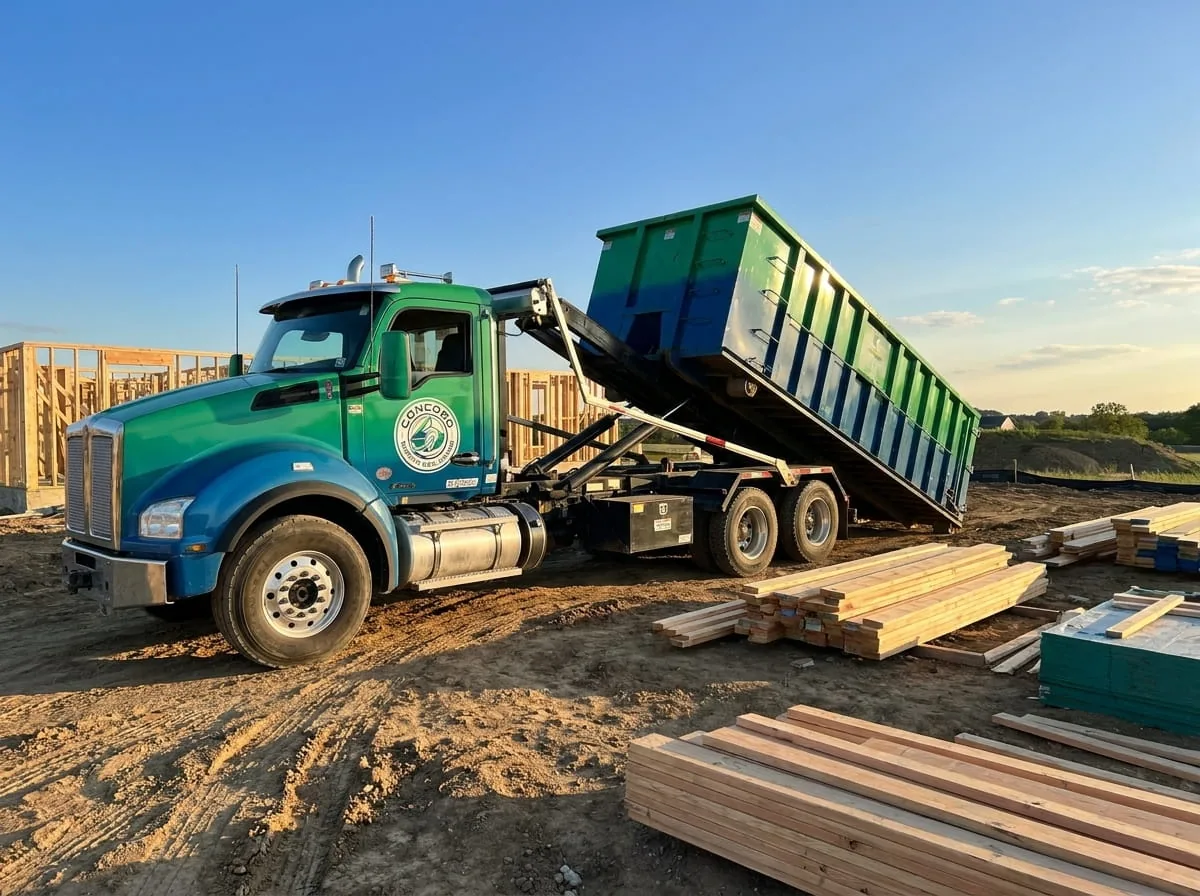
Broken concrete weighs roughly 4,000 pounds per cubic yard. A 20 yard container filled with it would weigh forty tons, which is far beyond what any roll-off truck can legally carry on a New Hampshire road. Heavy-debris containers are therefore filled by weight and stopped well short of the rim.
We use 10 yard containers almost exclusively for clean fill, and we mark a fill line that keeps the load legal. That looks alarmingly empty to a customer seeing it for the first time, and it is entirely correct.
The upside is price. Clean, sorted concrete, brick and asphalt can be crushed and reused as aggregate, so it is processed as a recoverable material rather than as waste. Kept clean, it is one of the cheaper streams we handle. Contaminated with wood, plastic, rebar mesh or drywall, it is one of the more expensive.
What counts as clean fill
Acceptable in a clean-fill container: broken concrete with or without embedded rebar, concrete block, brick, mortar, stone, ceramic tile, porcelain fixtures, asphalt pavement and clean soil.
Not acceptable: wood, plastic, metal, insulation, drywall, roofing, painted or coated concrete in quantity, contaminated soil and anything with a hazardous history. Even a small amount of mixed material can reclassify the whole load.
If a demolition produces both streams, we set two containers. The extra rental is almost always less than the cost of a contaminated heavy load.
Typical Concord-area projects
Driveway and walkway removal, foundation and slab demolition, chimney and fireplace teardowns in the older housing through the South End and Penacook, retaining wall replacement, patio and pool deck removal, and stump-and-soil work from landscape projects.
New Hampshire's frost cycle is hard on flatwork, and a good share of the concrete we haul out of Concord driveways is failing for exactly that reason. Frost-heaved slabs break up into awkward, heavy pieces, and breaking them into manageable sizes before loading saves everyone effort.
Loading heavy material safely
Load from the door end rather than over the wall wherever possible, and distribute the weight along the length of the container rather than piling it at one end. An unbalanced heavy load is difficult and sometimes unsafe to winch onto the truck.
Do not exceed the marked fill line. It exists because of road weight limits, not because we are being conservative. A container loaded over the line has to be partially emptied before it can be moved, which nobody enjoys.
Break large slabs down before loading. Pieces that fit comfortably in the container pack far more efficiently, and you will get more into the same legal weight.
Where we provide this service
We deliver concrete & heavy debris disposal across Concord including Penacook, and throughout the surrounding Merrimack County towns.
Book concrete & heavy debris disposal in Concord
One call gets you a flat rate, an honest size recommendation and a delivery slot.
(888) 921-1635Concrete & Heavy Debris Disposal: common questions
How much concrete fits in a 10 yard dumpster?
Considerably less than 10 yards. Weight limits mean a clean-fill container typically takes roughly 6 to 8 tons of concrete, which fills only the bottom portion of the box. That is normal and legal.
Can concrete with rebar go in?
Yes. Embedded reinforcing steel is expected and is separated during crushing. What causes problems is loose scrap metal, wood and plastic mixed through the load.
Is dirt accepted?
Clean soil with no contamination history is generally accepted in a dedicated container. Tell us the source and volume when you call so we can confirm before delivery.
Why is a heavy-debris container cheaper than a mixed one?
Because clean concrete, brick and asphalt get crushed and reused as aggregate rather than disposed of. Sorted, it is a recoverable material. Mixed with general debris, it becomes waste and is priced as waste.