Estate Cleanouts in Concord: A Practical, Unhurried Guide
Nobody is ready for this job. A structure helps, and so does giving yourself considerably more time than the container companies usually offer.
Clearing a parent's or relative's home is a job nobody has practised for and most people only do once or twice. It is physically demanding, emotionally heavy, and usually happening against a deadline set by a probate timeline or a closing date. What follows is the sequence we have watched work across a lot of Concord-area properties.
Before you throw anything away
Do one full walkthrough with a notebook and throw nothing out. The purpose is to find the things that must not go in a container before anyone gets into a rhythm.
Documents first. Deeds, titles, insurance policies, tax records, military discharge papers, pension and account statements, safe deposit keys. These turn up in wardrobes, under mattresses and inside books, not in filing cabinets. Anything with an account number needs shredding rather than disposal.
Then the small valuables. Jewellery, coins, watches, cash. Older generations frequently kept cash in the house, and it is found in envelopes inside books, taped under drawers and in coat pockets with genuine regularity.
Then photographs. Unlabelled photographs are the single most commonly regretted disposal. Box them all now and sort them in a year.
Then the hazardous inventory. Walk the basement, garage and shed listing paint, solvents, fuel, oil, propane cylinders, pesticides and batteries. These cannot go in a container and knowing the extent early lets you plan. Our prohibited materials guide covers where each goes.
A room-by-room order that works
Start with the least emotionally loaded rooms and work inward. This is not sentimentality; it is a practical way to build momentum and let everyone find their pace before reaching the difficult rooms.
- Garage, shed and basement. Mostly tools, materials and stored items. Decisions come easily.
- Attic. Similar, though it is where photographs and documents hide.
- Kitchen. High volume, low emotional weight, and a lot of it can go to a charity shop.
- Bathrooms and utility spaces. Quick.
- Living and dining rooms. Furniture decisions and the first genuinely valuable items.
- Bedrooms. Clothing, personal effects.
- The main bedroom and any study. Hardest. Leave until you have practice.
The four-pile method
Every item goes into one of four categories, and the discipline is deciding once rather than revisiting.
Keep. Family members claim what they want. Do this early and explicitly, because unresolved claims are where family disputes start. Write down who is taking what.
Sell. Anything with genuine resale value. See the next section.
Donate. Serviceable furniture, clothing, kitchenware, books, tools. Several Concord-area charities will collect furniture, though most want it in good condition and will decline upholstery with damage.
Dispose. Everything else, into the container.
The failure mode is a fifth pile called "decide later". It grows, it blocks the room, and it is still there in three weeks. If something genuinely needs a decision from someone who is not present, box it and label it, but keep it to one box.
What has value in an older Concord home
This part is worth slowing down for, because the difference between a house cleared thoughtfully and one cleared quickly can run to thousands of dollars.
- Antique and mid-century furniture. Solid wood pieces, particularly anything pre-1940 or genuine mid-century modern.
- Tools. Old hand tools, machinist tools and quality power tools have a strong market. A well-equipped basement workshop in a Concord home is frequently worth more than the furniture upstairs.
- Costume jewellery, silver and flatware. Sterling is worth its weight even when the pattern is unfashionable.
- Books. Most are not valuable. First editions, local New Hampshire history, and technical or trade books can be.
- Anything New Hampshire. Local advertising, postcards, mill and railroad ephemera, Shaker items, old maps. Regional collectors are active.
- Cast iron and copper. Radiators, tubs, cookware, plumbing. Scrap value that is worth removing from the load anyway.
A local auctioneer or estate buyer will usually walk the property free of charge and tell you what is worth handling. Several will clear an entire room in exchange for the contents, which removes both the disposal cost and the labour.
Realistic timelines
People consistently underestimate this by a factor of two or three. As a rough guide, with two or three people working:
- A one-bedroom apartment: two to three days.
- A three-bedroom house, no basement or attic: five to seven days.
- A three-bedroom house with a full basement, attic and garage: two to three weeks.
- A property with fifty years of accumulation and outbuildings: a month or more.
Grief slows everything down, and it should. A room that would take two hours to clear in a rental turnover takes a day when it belonged to your mother. Build that into your plan rather than treating it as a failure of efficiency.
Getting the container arrangement right
The standard seven-day rental that suits a bathroom remodel is usually the wrong structure here. We routinely set estate cleanouts up as extended rentals of two to four weeks at a daily rate, precisely so nobody is working against a clock.
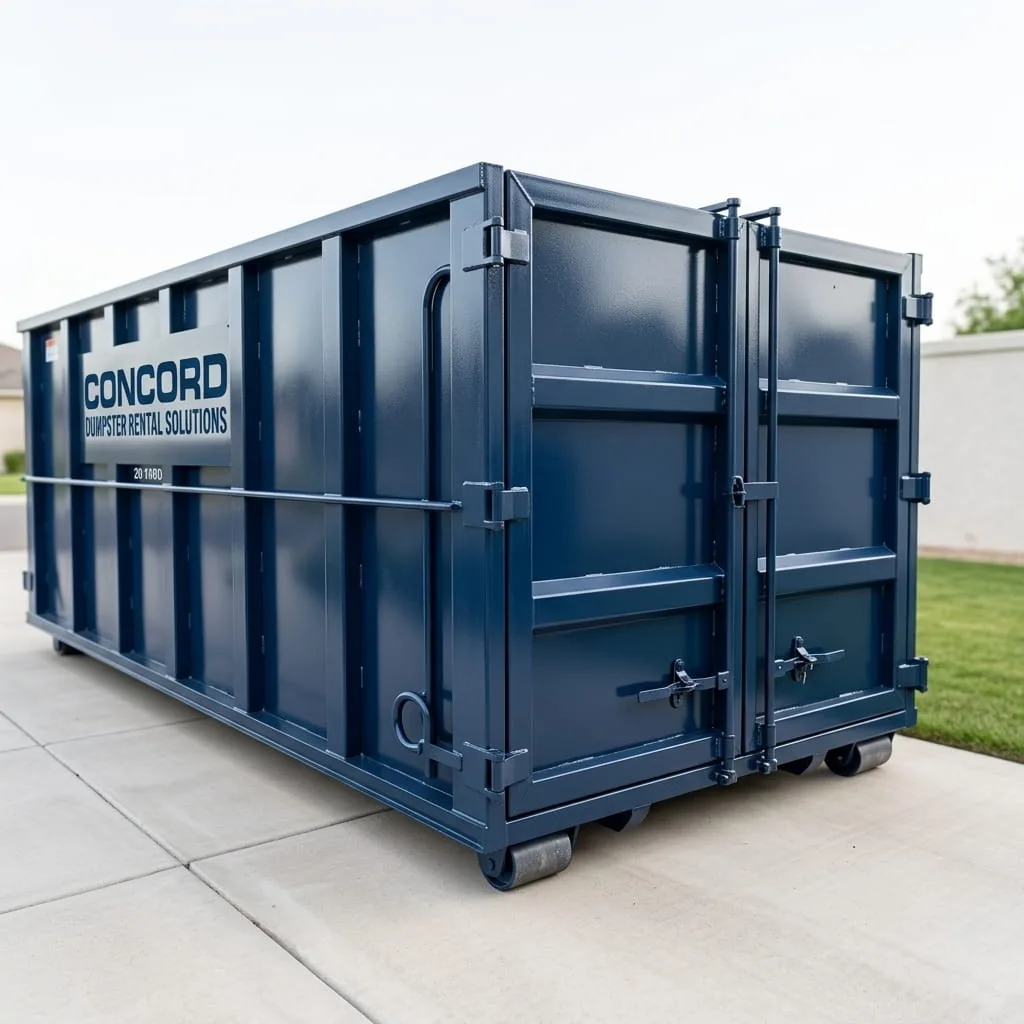
On sizing, household contents are bulky rather than dense, which pushes the container up. A three-bedroom Concord home being fully cleared usually needs a 30 yard, sometimes with one swap. The exception is a property with a heavily used basement, garage or barn, where stored tools, machinery and building materials add real weight. Mention the outbuildings when you call.
Practical placement matters more here than on most jobs, because you will be carrying material out over weeks rather than throwing it in over a weekend. Closer to the door beats closer to the road.
And if you are an executor or attorney, tell us at booking. We can invoice the estate directly with documentation suitable for probate accounting. Our estate cleanout page has more on how that works.
Frequently asked questions
How long should I allow for an estate cleanout?
Considerably longer than you think. A three-bedroom Concord home with a basement, attic and garage typically takes two to three weeks with two or three people working. Properties with outbuildings and decades of accumulation can take a month.
What size dumpster do I need to clear a house?
A 30 yard for a typical three-bedroom home, occasionally with one swap. Household contents are bulky rather than heavy, which is why the larger container is the economical choice here even though it would be wrong for a demolition.
Can the dumpster stay longer than a week?
Yes, and for estate work it usually should. We set these up as extended rentals at a daily rate as a matter of course. Two to four weeks is entirely normal and there is no penalty for it.
Should I sell things before clearing the house?
Yes, wherever there is value. Tools, antique furniture, sterling, and New Hampshire regional items all have active markets. A local auctioneer will typically walk the property free and tell you what is worth handling, and some will clear rooms in exchange for the contents.
Questions about your own project?
We will give you a straight answer on sizing and a flat rate on the phone, whether or not you book with us.
(888) 921-1635