What You Can't Put in a Dumpster in New Hampshire (And Where It Goes Instead)
Roughly 95 percent of what comes out of a house is fine. This is about the other five percent, and where each item actually needs to go.
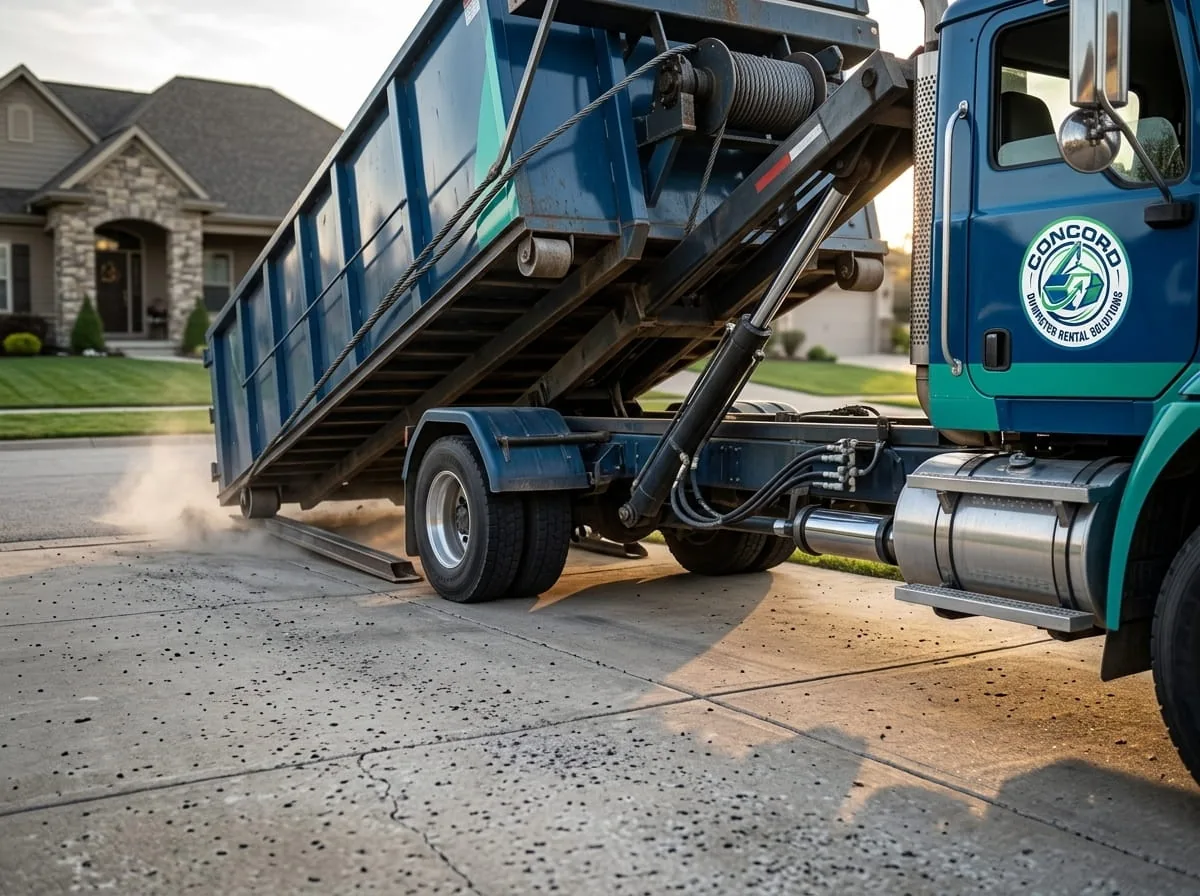
Most of what comes out of a house or a job site can go straight in the container without a second thought. Furniture, carpet, drywall, lumber, cabinets, roofing, fixtures, packaging, yard debris, general clutter — all fine. This article is about the exceptions, which are fewer than people fear but more consequential than they realise.
The general rule
A roll-off container is licensed to carry solid, non-hazardous waste to a permitted facility. Anything that is liquid, pressurised, toxic, flammable, reactive, infectious or specifically regulated falls outside that licence. The receiving facility can reject a whole load over one item, and that cost lands on the customer.
New Hampshire's solid waste framework sits under RSA 149-M, administered by the New Hampshire Department of Environmental Services. The statute also sets a waste management hierarchy that puts reduction, reuse and recycling ahead of disposal, which is worth keeping in mind before you throw anything away.
Absolutely prohibited
- Liquid paint, stains, solvents and thinners. Liquids are not permitted in a solid waste container at all. Latex paint dried out completely with kitty litter or a hardener, lid off, is a different matter and generally acceptable.
- Motor oil, transmission fluid, antifreeze, brake fluid. All hazardous and all restricted.
- Gasoline, diesel, kerosene, propane and any fuel container. Propane cylinders in particular are a genuine hazard in a compactor and are taken very seriously.
- Batteries of any kind. Automotive, lithium-ion, and rechargeable batteries are all restricted. Lithium batteries are a leading cause of fires at waste facilities nationally.
- Asbestos-containing material. Regulated abatement work with licensed contractors and specific documentation. Never in a general container.
- Tyres. Regulated separately and not accepted in general waste.
- Medical, infectious and radioactive waste.
- Pesticides, herbicides and pool chemicals.
- Contaminated soil. Clean soil is fine in a dedicated container. Soil with a contamination history is not.
Restricted with conditions
- Appliances containing refrigerant — refrigerators, freezers, air conditioners, dehumidifiers, heat pumps. The refrigerant must be professionally recovered and the unit tagged before disposal. Once that is done, the appliance itself is fine.
- Electronics and televisions. Handled through separate e-waste streams rather than general waste.
- Mattresses and box springs. Accepted in the container, but they carry a per-item handling fee at the processing end because they have to be pulled and processed separately. Tell us the count when you book and it goes in the quote.
- Fluorescent tubes and CFL bulbs. Contain mercury and are handled separately.
- Concrete, brick, block, asphalt and soil. Not prohibited, but they belong in a dedicated clean-fill container rather than mixed with general debris. Mixed in, they turn a recoverable material into expensive waste.
- Stumps and large root balls. Tell us in advance. The soil that comes with them changes how the load is handled.
Items that surprise people
A few things catch out otherwise well-prepared customers, and they turn up constantly in older Concord properties.
Old fuel oil tanks. Basements across the city still have them. Even a decommissioned tank has residue and needs specialist handling.
Half-full paint cans from a 1970s workshop. An estate cleanout in a South End or Penacook home will produce dozens of them. Set them aside as you go rather than dealing with them at the end.
Railway sleepers and treated landscape timbers. Creosote-treated material is restricted at many facilities. Ask before you load a retaining wall's worth.
Ash from a wood stove. Must be completely cold, and given how many Concord homes heat with wood, "completely" deserves emphasis. Ash retains heat for far longer than people expect and has started fires in containers.
Yard waste in quantity. Small amounts mixed in are fine. Concord runs separate spring and autumn leaf collection programmes and asks residents not to put leaves and grass in with trash, and bulk yard waste is genuinely better handled through those routes or through the earth materials reprocessing facility on Fort Eddy Road.
Where things go instead near Concord
The Concord Transfer Station at 77 Old Turnpike Road is the main resident drop-off point, open Monday to Saturday and available to residents and small businesses in the member communities of the Concord Regional Solid Waste/Resource Recovery Cooperative. It takes a range of the items above, including electronics, appliances, scrap metal and automotive waste, and there is a minimum charge for scaled materials.
For household hazardous material specifically, watch for collection events run through the region rather than trying to dispose of it any other way. Automotive fluids and batteries are frequently taken back free by the retailers that sold them. Propane cylinders can normally be exchanged rather than disposed of.
Residents of the surrounding towns should check their own arrangements, because they differ. Hopkinton shares a transfer station with Webster. Chichester and Epsom belong to the BCEP district with Barnstead and Pittsfield. Henniker's waste is hauled privately.
What happens if it ends up in the container
Usually it is spotted before the container leaves, and the driver will simply ask you to remove it. That is the good outcome and the reason drivers look.
If prohibited material reaches the facility, the load can be rejected. That means the container comes back, the material has to be removed, and a second haul is required. Those costs pass to the customer, and for genuinely hazardous material there can be regulatory consequences on top.
None of which is a reason for anxiety. It is a reason to ask. If you find something in a basement and cannot work out which category it belongs in, call us and describe it. We would far rather spend two minutes on the phone than have a load turned away.
Frequently asked questions
Can I put paint in a dumpster in New Hampshire?
Not in liquid form. Latex paint that has been fully dried out with hardener or kitty litter, with the lid off so it is visibly solid, is generally acceptable. Oil-based paints, stains and solvents are hazardous and need separate handling regardless of their state.
Can I throw away a refrigerator or air conditioner?
Only after the refrigerant has been professionally recovered and the unit tagged. Once that is done the appliance is ordinary scrap. Untagged units containing refrigerant will be refused.
Are mattresses allowed in a dumpster?
Yes, but they carry a per-item handling fee at the processing end. Tell us how many when you book and we will include it in the quote rather than adding it later.
What happens if something prohibited gets in by accident?
Tell us before pickup and it is a non-event. If it reaches the facility the load can be rejected, which means a return trip and a second haul at your cost. Drivers do check, which is why most of these get caught in the driveway.
Questions about your own project?
We will give you a straight answer on sizing and a flat rate on the phone, whether or not you book with us.
(888) 921-1635